
how-to
Can a Private Chef Cook in Small Kitchens? A Practical Guide
Table of Contents
- Can a Private Chef Actually Cook in a Small Kitchen?
- How to Prepare Your Kitchen for a Private Chef
- Private Chef Kitchen Requirements You Should Know
- Choosing the Right Private Chef Equipment for Limited Space
- Private Chef Menu Planning for Limited Space
- Managing Workflow and Avoiding Congestion
- Service Timeline and Guest-Count Limits for Small Kitchens
- Frequently Asked Questions
Last Updated: October 19, 2026
Can a Private Chef Actually Cook in a Small Kitchen?
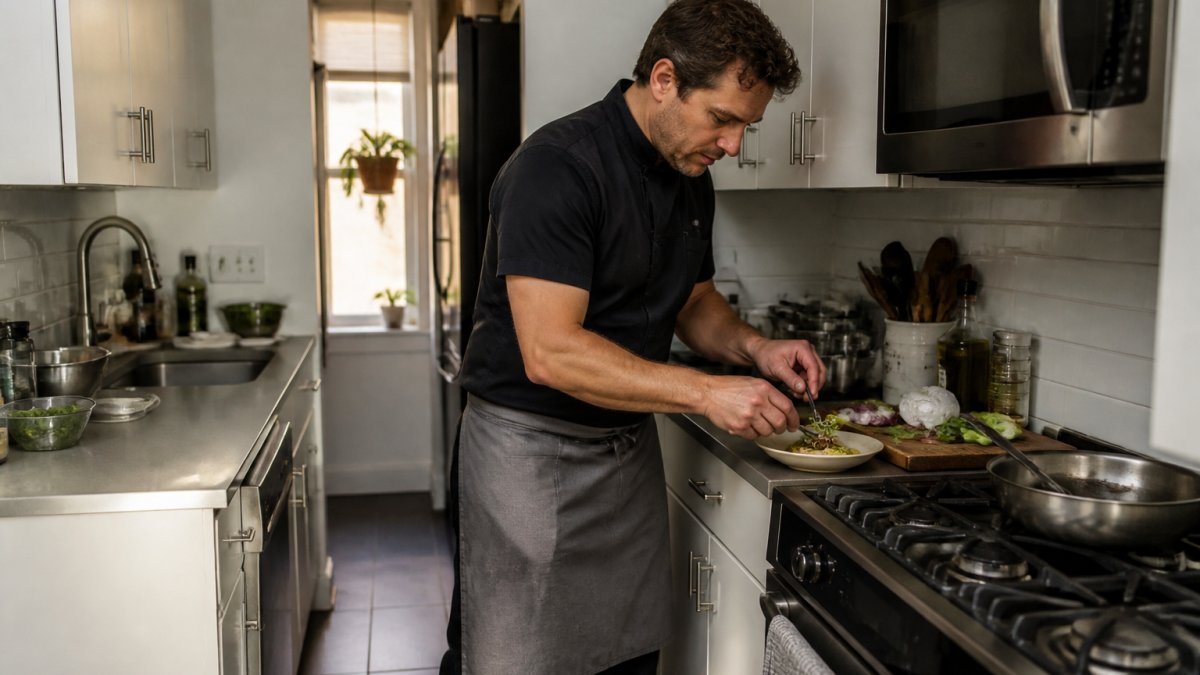
Yes, a private chef can absolutely cook in small kitchens, and understanding how a private chef cooks in small kitchens is key to success. The real question isn't whether it's possible, it's whether you prepare properly beforehand.
Small kitchens present real constraints: counter space disappears fast, storage is limited, equipment options shrink. But these challenges are solvable. A chef who understands your kitchen's layout, power capacity, and appliance limitations can deliver a full restaurant-quality meal in a compact space.
Most people underestimate how much preparation matters, assuming a professional chef will simply adapt on the fly. That assumption costs time, creates stress, and often compromises food quality.
How to Prepare Your Kitchen for a Private Chef
Preparation before a private chef arrives is non-negotiable. Start with a realistic walkthrough of your space. Don't focus on what you wish your kitchen had, focus on what it actually contains.
Clear counters completely. Remove appliances you won't use and relocate items from cabinets near your prep area.
Check your refrigerator space. A chef bringing prepared components needs to know exactly how much room exists. If your fridge is packed, clear shelves or move items to a cooler beforehand.
Test your oven and stovetop. Confirm they heat properly and reach the temperatures needed for the menu. Ovens that run hot or cold affect cooking times, and uneven burners create real problems.
Pre-Booking Kitchen Suitability Checklist
Use this checklist before you book a private chef. Be honest about your answers; your chef needs accurate information.
- Counter space: Do you have at least 1.2 meters of clear, unobstructed counter space for prep work?
- Refrigerator capacity: Can you clear 2-3 shelves if the chef needs to store prepared components or ingredients?
- Freezer space: Is there room for ice or frozen items the chef may need during service?
- Oven: Does your oven heat evenly and reach 200°C+ without issues?
- Stovetop: Do all burners ignite and heat properly?
- Sink: Is there hot water, adequate pressure, and space to wash dishes and prep vegetables?
- Electrical outlets: Are there at least 2 outlets within 1.8 meters of your main prep area?
- Lighting: Can you see clearly at counter height, or do you need to add a lamp?
- Ventilation: Does your range hood or window open to remove cooking steam and odors?
- Floor space: Can two people move around your kitchen without colliding?
Answering "no" to any of these doesn't disqualify your kitchen. It simply tells your chef what to expect and how to plan around it.
Private Chef Kitchen Requirements You Should Know
Every professional chef needs baseline conditions to work safely and efficiently. Understanding them helps you assess your kitchen and plan necessary adjustments.
Counter Space and Workspace
Counter space is the most precious resource in a small kitchen. The ideal is at least 1.2 linear meters of unobstructed, flat counter surface for mise en place, the setup of ingredients, tools, and prepared components before cooking begins.
If your kitchen doesn't have 1.2 continuous meters, a chef can work in sections, using counter space in stages, but this slows the workflow.
Workspace extends beyond counters. If two people can barely pass each other in your kitchen, congestion becomes a real problem during service, meaning slower work, higher stress, and greater risk of accidents, spilled pots, dropped plates, and burns.
Power, Ventilation, and Building Constraints
Electrical capacity matters more than most people realize. A chef running a blender, immersion circulator, or additional appliance alongside your oven and stovetop can overload older systems. Confirm at least 2 dedicated outlets near your prep area.
Ventilation removes heat, steam, and cooking odors. A range hood that vents outside is ideal; an opening window works. Recirculating hoods help but don't fully solve the problem. Without either, cooking times extend and the experience becomes uncomfortable.
Building constraints vary. Older buildings often have lower ceilings, narrower doorways, and weaker electrical systems. Renovated spaces may have modern kitchens but still lack ventilation. Understand your building's limitations before booking.
Choosing the Right Private Chef Equipment for Limited Space
Equipment choices directly affect what a chef can accomplish in a small kitchen. Knowing what to bring versus what already exists is the difference between smooth execution and frustration.
Compact and Portable Cooking Equipment
A chef working in a small kitchen brings carefully chosen tools. Heavy equipment stays home; versatile, lightweight gear that delivers multiple functions wins.
A quality chef's knife and a cutting board are non-negotiable. These are personal tools a chef always brings. A good knife is sharper and more reliable than what most home kitchens contain.
Portable equipment that adds value includes immersion blenders, quality tongs, and heat-resistant silicone utensils. A small food scale helps with portioning, and an instant-read thermometer ensures proteins cook to the correct temperature.
Avoid equipment that duplicates what your kitchen already has. If you own a food processor or blender, the chef uses yours unless it's unreliable.
What the Chef Brings vs. What You Supply
Before booking, clarify who provides what to prevent last-minute scrambling.
A professional chef brings knives, cutting boards, measuring tools, small appliances they trust, and specialty items your kitchen likely lacks, plus cleaning supplies and trash bags for the cleanup they handle afterward.
You supply core equipment: oven, stovetop, refrigerator, sink, pots, pans, and dishes, plus basic pantry items the chef specifies in advance. Ensure the kitchen is clean and accessible when the chef arrives.
The chef should provide a detailed list of what they need from your kitchen before arriving. Review it carefully and flag anything you lack so the chef can bring it or adjust the menu.
Private Chef Menu Planning for Limited Space
Menu choices directly impact how a small kitchen functions during service. Not every dish works well in limited space. A smart chef adapts the menu to your kitchen's actual capabilities.
Adapting Menus to Your Kitchen's Capabilities
Some cooking methods demand more space and equipment than others. Deep frying requires a dedicated pot and careful oil management. Grilling requires outdoor space or a stovetop grill pan. Multiple simultaneous sauces demand burner space and attention.
A kitchen with one oven and two burners can't execute a menu requiring four simultaneous cooking processes. A chef plans accordingly, choosing dishes that use your oven and stovetop efficiently and sequencing cooking so everything comes together at the right moment.
Discuss your kitchen's limitations honestly when planning the menu: how many burners you have, whether your oven is reliable, what appliances are available.
Batch Preparation and Mise en Place in Compact Kitchens
Mise en place, the setup of all ingredients and tools before cooking begins, is essential in small kitchens. In a large restaurant kitchen, a chef has space to spread everything out.
Batch preparation means preparing components in stages rather than all at once. A chef might prep vegetables first, clear that space, then move to proteins. This approach requires less counter space at any given moment.
Organization is everything. Ingredients go into small bowls in the order they'll be used. Tools are arranged so the chef reaches for them without searching. Trash and compost have designated spots. Every item has a place.
Managing Workflow and Avoiding Congestion
Workflow in a small kitchen is like choreography. Every movement must be intentional. Congestion kills efficiency and creates stress.
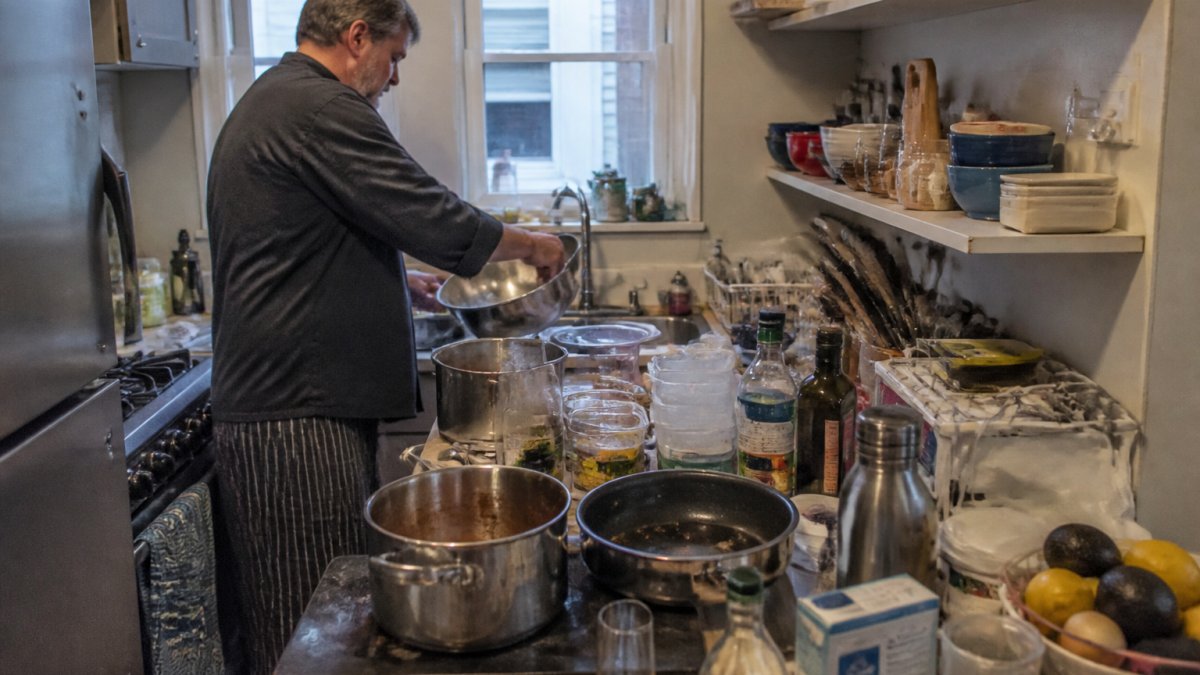
A chef working in a small kitchen moves in patterns. They work on one side of the counter, then the other.
Your role is to stay out of the way. This sounds simple, but it's crucial. A kitchen designed for one person becomes chaotic with two. If you're curious and hovering, you're creating congestion.
Organizing Ingredients, Equipment, and Utensils
Organization before service determines whether the chef works smoothly or constantly searches for things. Everything the chef needs must be accessible without digging through cabinets or drawers.
Ingredients should be arranged in the order they'll be used. This seems like a small detail, but it saves time and reduces mistakes.
Equipment should be within arm's reach of where it'll be used. Pots and pans near the stove. Cutting boards and knives at the prep station. Serving dishes near the plating area.
Utensils should be sorted by function. Stirring spoons together. Measuring spoons together. Tongs and spatulas in one spot. A chef working in a familiar kitchen might know where things live.
Food Safety and Cross-Contamination in Constrained Spaces
Small kitchens create food safety challenges that larger spaces don't. Limited counter space means raw proteins and ready-to-eat foods sit closer together.
A professional chef manages these risks through careful organization and timing. Raw proteins are prepped first, then that area is cleaned before moving to other ingredients.
Your kitchen's cleanliness matters. Surfaces should be clean before the chef arrives. Refrigerator shelves should be organized so raw proteins sit below ready-to-eat items, preventing drips.
Discuss food safety practices with your chef beforehand. If you have allergies or dietary concerns, communicate them clearly. A chef who understands your household's specific needs can plan accordingly.
Service Timeline and Guest-Count Limits for Small Kitchens
Small kitchens have real limits on how many people you can serve and how quickly service can happen. Understanding these limits prevents disappointment.
A chef working alone in a small kitchen can comfortably serve 4-6 guests.
Service timing depends on the menu. A simple three-course meal takes roughly 2.5 to 3 hours from arrival to cleanup completion.
Be realistic about your expectations. If you want a chef to serve 12 people a five-course meal in a small kitchen in two hours, that's not realistic.
Discuss timeline and guest count with your chef when booking. A good chef will give you honest guidance about what works in your specific space.
Small kitchens don't disqualify you from having a private chef experience; knowing how a private chef cooks in small kitchens with proper planning makes all the difference. At Mise en Your Place, we thrive in exactly these conditions, transforming your kitchen into a culinary classroom where you learn real techniques, enjoy restaurant-quality food, and create lasting memories with the people you care about. Book now to experience how professional cooking works in your home.
Frequently Asked Questions
Can a private chef actually work in a small kitchen?
Yes, private chefs regularly work in small kitchens. Success depends on advance planning, menu adaptation, and clear communication about your kitchen's layout and equipment. Professional chefs are trained to maximize limited counter space, organize ingredients efficiently, and adjust cooking techniques to fit your home's constraints. The key is discussing your kitchen's specific limitations before booking so the chef can plan accordingly.
What kitchen equipment does a private chef need in a small kitchen?
Essential private chef equipment for small spaces includes sharp knives, cutting boards, mixing bowls, sheet pans, one or two quality pots and pans, and basic utensils. Many chefs bring their own portable equipment to supplement what's available. Discuss beforehand what you have and what the chef will bring. Compact appliances like immersion blenders and small food processors can replace larger equipment. The chef will work within your kitchen's existing oven and stovetop capacity.
What should I prepare before a private chef arrives?
Clear counter space, remove clutter from the kitchen, and ensure your refrigerator has room for ingredients. Provide a list of any dietary restrictions or allergies. Confirm your stovetop and oven are in working order, and disclose any kitchen layout quirks or limited space. Remove personal items from the sink and dish racks. If your kitchen is very compact, let the chef know the exact dimensions and appliance locations. A clean, organized space helps the chef work safely and efficiently.
How long does a private chef service typically take in a small kitchen?
A multi-course private chef experience usually takes 3 to 4 hours, depending on the menu complexity and number of guests. Small kitchens may require slightly longer prep time due to space constraints and the need for sequential cooking steps. The chef handles all setup and cleanup, so your time commitment is mainly the cooking instruction and dining. Discuss timing expectations during booking to ensure the experience fits your schedule and comfort level.
Ready to cook something memorable?
Chef Chris brings the full restaurant experience into your home — every detail handled, every dish made together.