
ultimate-guide
Cooking Classes for Absolute Beginners: A Complete Guide
Table of Contents
- Why Absolute Beginners Choose Hands-On Cooking Classes
- What to Expect at a Cooking Class as a Complete Beginner
- Basic Cooking Skills for Beginners You'll Master
- Cooking Class Duration and What Fits Your Schedule
- Private In-Home Classes vs. Group and Online Options
- How to Prepare for Your First Class and What to Bring
- Choosing the Right Class for Your Kitchen and Learning Style
- Frequently Asked Questions
Last Updated: October 18, 2026
Why Absolute Beginners Choose Hands-On Cooking Classes
Cooking classes absolute beginners choose exist because confidence in the kitchen doesn't come from watching videos alone. When you've never chopped an onion properly or understood how heat transforms raw ingredients, theory feels disconnected from reality. Hands-on instruction closes that gap. A professional chef can show you knife grip, heat control, and timing in ways that stick, because you're doing it yourself, not observing from a distance.
The appeal runs deeper than just learning techniques. Many people who've avoided cooking their whole lives carry a specific fear: the worry that they'll mess something up irreversibly, or that cooking "talent" is something you're born with, not built. A structured class with a professional removes both barriers.
At Mise en Your Place, we see this shift happen repeatedly. Absolute beginners arrive uncertain about their abilities. By the end of a single session, they're plating restaurant-quality food they prepared with their own hands.
What to Expect at a Cooking Class as a Complete Beginner
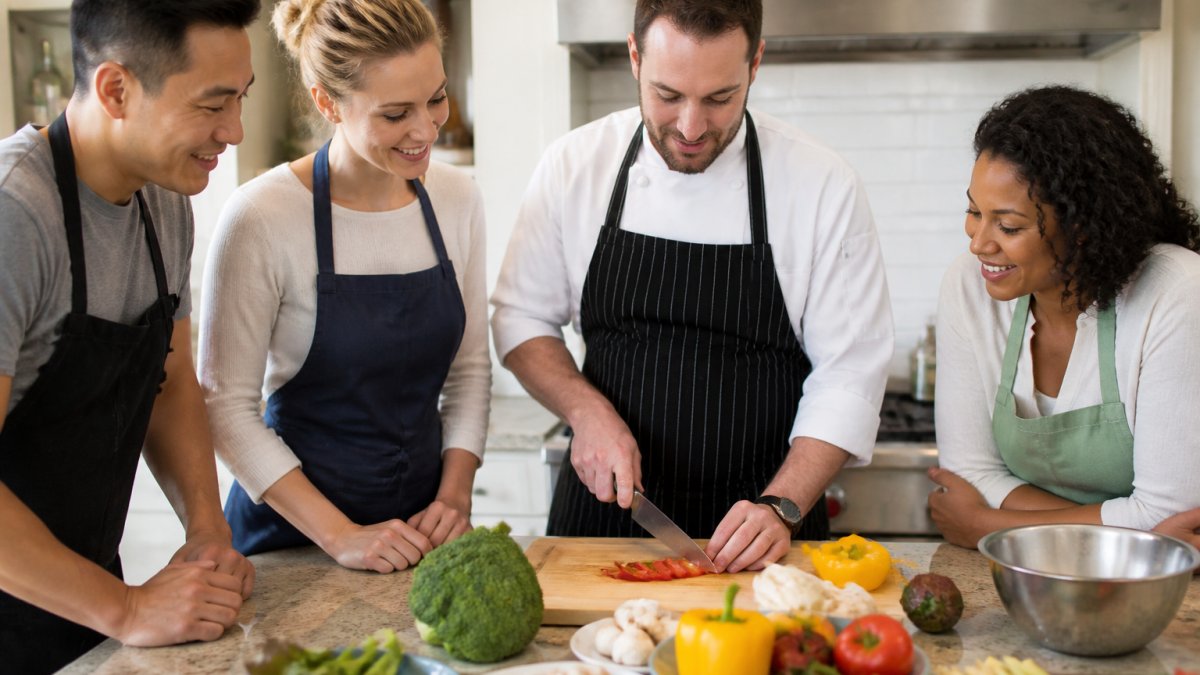
Your first cooking class as a complete beginner will feel different from what you might imagine. There's no lecture portion where an instructor talks at you for twenty minutes. Instead, you arrive at a kitchen, whether your own or a shared space, and immediately begin preparing real food.
The pacing matters enormously for absolute beginners. A good class moves slowly enough that you absorb fundamentals without feeling rushed, but fast enough that you stay engaged. You'll spend time on knife skills because they're foundational. You'll learn why a pan needs to be at a certain temperature before food goes in.
The emotional experience is equally important. Many absolute beginners worry they'll feel judged or out of place. Professional instructors who work with beginners create an environment where questions are welcomed, mistakes are normalized, and the focus stays on learning, not performance. You're there to build competence, not to impress anyone.
Basic Cooking Skills for Beginners You'll Master
Knife Skills and Food Preparation
Knife skills form the foundation of cooking confidence. An absolute beginner typically holds a knife awkwardly, applies too much pressure, and works slowly because they're afraid of slipping. A professional chef teaches you grip, hand position, and the rocking motion that makes cutting efficient and safe.
Food preparation extends beyond knife work. You'll learn how to prep ingredients before cooking begins, what chefs call mise en place. This means washing, peeling, chopping, and measuring everything in advance so cooking itself becomes a smooth sequence rather than a frantic scramble.
Understanding how to handle different ingredients matters too. You'll learn which vegetables require different cutting techniques, how to handle proteins safely, and why some ingredients need special preparation. This knowledge prevents common beginner mistakes like cutting delicate herbs the same way you cut carrots, or placing cold meat directly into a hot pan.
Heat Control and Cooking Techniques
Heat control separates confident cooks from anxious ones. Absolute beginners often cook everything on high heat because they assume hotter means faster. A professional shows you how different dishes require different temperatures, and how to recognize visual cues that tell you when food is ready.
The core techniques you'll practice include searing (high heat, quick browning), sautéing (medium heat, cooking vegetables until tender), simmering (low heat, gentle bubbling), and roasting (oven heat, hands-off cooking). Each has a specific purpose and a specific temperature range. Once you understand these four techniques, you can prepare hundreds of everyday dishes confidently.
Timing becomes intuitive through practice. Absolute beginners often second-guess themselves, is the chicken done? Is the pasta al dente? A professional teaches you how to test doneness: cutting into meat to check color, tasting pasta for texture, pressing vegetables to gauge tenderness. These tactile checks replace guesswork.
Building Confidence with Everyday Dishes
The meals you prepare in your first class matter strategically. They should be achievable, not so simple that you don't learn anything, but not so complex that you feel overwhelmed. Common first-class dishes include pasta with a simple sauce, stir-fried vegetables with protein, or a basic protein with roasted vegetables.
Repetition builds confidence faster than variety. Learning to make one dish well, really well, teaches you more than attempting five dishes poorly. Absolute beginners benefit from classes that focus on mastering one or two dishes rather than rushing through a broad menu. The skills transfer.
The emotional payoff matters as much as the technical skill. When you taste food you've prepared with professional guidance, something shifts. You realize cooking isn't mysterious or out of reach. It's a learnable skill, like driving or writing. That realization stays with you.
Cooking Class Duration and What Fits Your Schedule
Most hands-on cooking classes absolute beginners enroll in run between 90 minutes and three hours. A 90-minute class focuses on one core technique or one complete dish. A two-hour class allows time for technique instruction, hands-on practice, and enjoying the finished meal. Three-hour classes typically include multiple dishes or deeper exploration of technique.
The duration affects what you'll accomplish. Shorter classes (90 minutes) work well for learning a single technique, knife skills, for example, or how to make pasta from scratch. Medium-length classes (two hours) are ideal for absolute beginners because they allow time to learn, practice, and build confidence without fatigue.
Your schedule and energy level matter. If you're working a full day, a 90-minute evening class might be ideal. If you have a weekend morning free and want a more immersive experience, a three-hour class could be perfect. Consider also whether you want time to eat and enjoy the meal afterward.
Private In-Home Classes vs. Group and Online Options
Private in-home classes offer distinct advantages for absolute beginners. You're learning in your own kitchen with your own equipment, which means skills transfer directly to your daily cooking. The instruction pace adjusts to your speed.
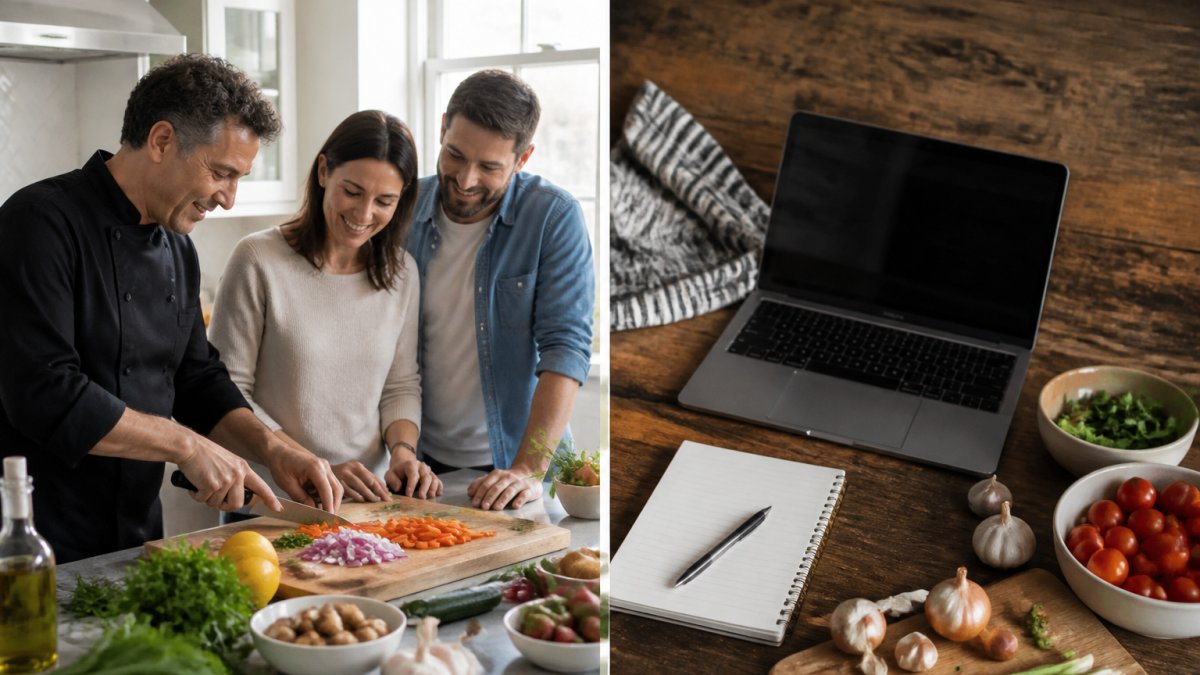
Group classes offer a different value. You're learning alongside others, which creates energy and removes the spotlight from you personally. Group settings often cost less per person because the instructor's time is shared.
Online classes eliminate location barriers. You can learn from your kitchen without traveling. They're often more affordable than in-person options. However, online instruction has real limitations for absolute beginners.
Mise en Your Place specializes in private in-home instruction, which means you're learning in the environment where you'll actually cook.
How to Prepare for Your First Class and What to Bring
Preparation removes unnecessary anxiety. Before your first class, think about what you want to learn. Do you want to master a specific dish? Build foundational knife skills? Gain confidence with a particular cuisine?
If you're taking a private in-home class, ensure your kitchen is reasonably clean but don't obsess. Your kitchen doesn't need to be immaculate.
Wear comfortable clothing that allows movement. You'll be standing and using your arms, so avoid anything restrictive. An apron is optional but practical, cooking involves splashing. Closed-toe shoes are safer than sandals.
What to bring depends on your class format. For in-home classes, you typically bring nothing except yourself and an open mind. The instructor brings ingredients, handles prep, and manages cleanup.
The most important preparation is mental. Absolute beginners often arrive with perfectionism or fear of failure. Reframe the class as an experiment. You're there to learn, not to produce restaurant-quality results on your first attempt.
Choosing the Right Class for Your Kitchen and Learning Style
Selecting a class requires honest self-assessment. Consider your kitchen's size and equipment. Do you have basic tools: a sharp knife, cutting board, pans, and a functioning stove and oven?
Your learning style matters. Are you someone who learns best by doing, or do you need explanation before attempting something? Do you prefer quiet, focused instruction or a more social, energetic environment?
Consider also your motivation. Are you learning because you want to cook for yourself regularly? Because you want to impress someone? Because you're interested in a specific cuisine? Because you want a unique date-night experience?
Your comfort level with being observed matters. Absolute beginners sometimes feel self-conscious learning in front of others. If that's you, private instruction removes that barrier.
Cooking confidence isn't something you're born with. It's built through guided practice in a supportive environment.
Mise en Your Place transforms your home into a professional culinary classroom where this learning happens naturally. Discover how private culinary instruction builds confidence in home cooks. Book a session and experience the difference personalized, professional guidance makes in your cooking journey.
Frequently Asked Questions
Can I take a cooking class if I have absolutely no cooking experience?
Yes. Beginner-friendly cooking classes are designed specifically for absolute beginners with no prior kitchen experience. A professional chef instructor will teach you from the ground up, starting with basic kitchen safety, equipment use, and fundamental techniques like knife skills and heat control. You'll work at your own pace, and the instructor will adjust the difficulty to match your comfort level. Many people take their first cooking class with zero experience and leave feeling confident they can prepare restaurant-quality meals at home.
What basic cooking skills should every beginner know?
Essential beginner skills include proper knife techniques for safe food preparation, understanding heat levels and when to use them, knowing how to taste and season correctly, and learning simple cooking methods like sautéing, boiling, and baking. You'll also learn how to read a recipe, prepare ingredients (mise en place), and understand how flavors work together. These foundational skills transfer across cuisines and everyday dishes, giving you the confidence to cook from scratch at home without relying on takeout or pre-made meals.
How long do beginner cooking classes usually last?
Cooking class duration varies depending on the format and curriculum. Always confirm the exact duration when booking so you can plan your evening accordingly.
What should I bring to a cooking class?
For most hands-on cooking classes, you'll need comfortable, closed-toe shoes and an apron to protect your clothes. Some instructors ask you to bring a notebook to jot down tips or recipe modifications. For private in-home classes, your kitchen is already equipped, so you won't need to bring cookware or ingredients, the instructor typically handles all setup and cleanup. Check with your specific class provider about any dietary restrictions or allergies you need to declare in advance so the chef can plan the menu accordingly.
Is a private cooking class a good option for beginners with no confidence?
Private cooking classes are excellent for absolute beginners who feel nervous about cooking. You'll have one-on-one attention from a professional chef, no pressure from other students, and the ability to ask questions freely without feeling self-conscious. The instructor can slow down, repeat techniques, and tailor the lesson to your specific goals and kitchen setup. Many beginners find private classes less intimidating than group settings, which helps them relax, absorb information better, and actually enjoy learning instead of feeling rushed or judged.
How do I know a cooking class is beginner-friendly and not too advanced?
Look for classes explicitly labeled 'beginner' or 'absolute beginner' and check the course description for phrases like 'no prior experience needed' or 'kitchen basics.' Read reviews or testimonials from other beginners to see if they felt the pace was manageable. A good beginner class focuses on fundamental techniques and everyday dishes rather than advanced plating or exotic ingredients. Ask the instructor directly about the difficulty level and what skills you'll need before signing up, a responsive, welcoming instructor is a good sign they're genuinely prepared to teach beginners.
Will I actually learn real cooking techniques, or is it just a fun dinner experience?
A legitimate cooking class teaches genuine culinary techniques you can apply at home independently. You'll learn proper knife skills, temperature control, seasoning, and sauce-making, skills that transfer to countless recipes. The instructor should explain the 'why' behind each technique, not just show you the steps. By the end, you should feel confident replicating what you learned without the chef's help. The meal you enjoy together is a bonus, but the real value is the knowledge and skills you take home so you can cook restaurant-quality meals in your own kitchen.
What if my kitchen is small or messy, can I still take a private cooking class?
Most private in-home cooking classes work with kitchens of any size. Professional chefs are experienced at adapting to different kitchen layouts and equipment. They'll make the most of your space and work around limitations. A messy kitchen isn't a dealbreaker, many instructors arrive early to set up and organize the workspace. If you're concerned, mention your kitchen size or setup when booking so the instructor can confirm it's suitable and plan accordingly. The focus is on teaching you, not judging your kitchen.
Ready to cook something memorable?
Chef Chris brings the full restaurant experience into your home — every detail handled, every dish made together.