
how-to
Cooking Lessons for Family Bonding: A Step-by-Step Guide
Table of Contents
- Why Cooking Lessons Strengthen Family Bonds
- What You'll Need Before You Start
- Planning Family Cooking Activities That Work for Everyone
- Easy Recipes to Make With Family
- Cooking Lessons for Kids: Age-Appropriate Roles and Safety
- Family Cooking Night Ideas: From Setup to Shared Meal
- Common Mistakes to Avoid
- Making Cooking Lessons Inclusive and Stress-Free
- Frequently Asked Questions
Last Updated: October 11, 2026
Why Cooking Lessons Strengthen Family Bonds
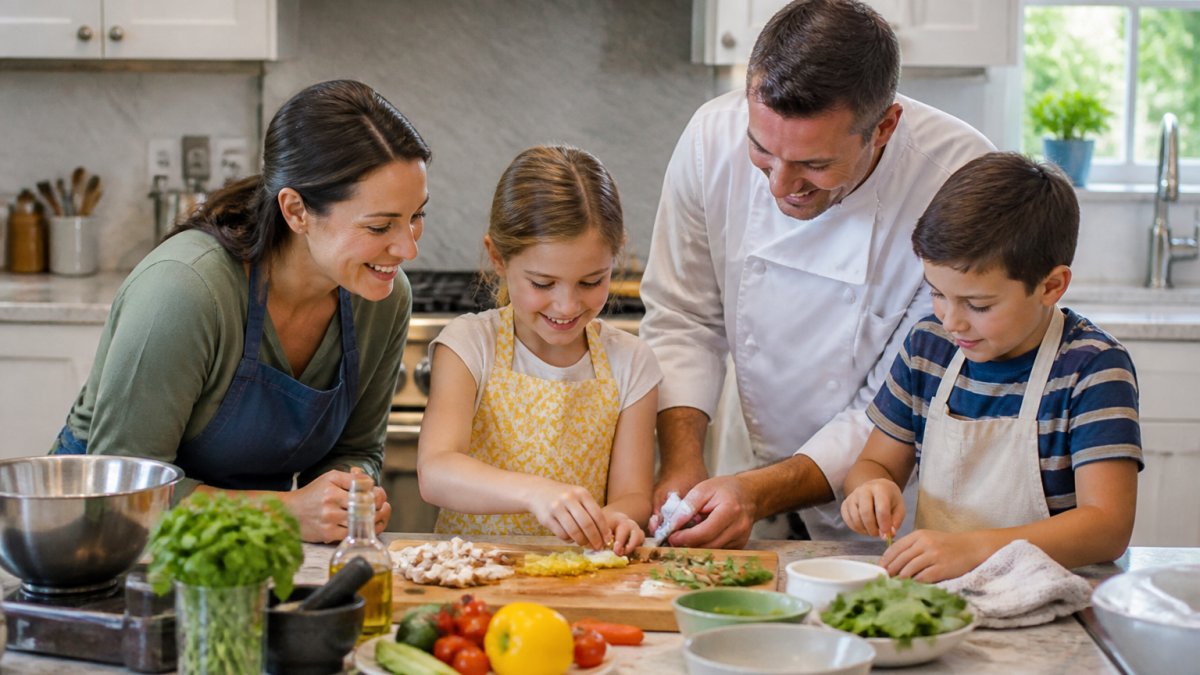
Cooking lessons for family bonding create moments where everyone participates in something meaningful together, building shared memories and learning from each other.
The kitchen becomes a classroom without pressure. Unlike structured activities, cooking invites natural conversation, lets everyone work toward a common goal, and gives each person a role that matches their abilities.
This experience builds confidence in unexpected ways. A child who stirs the sauce feels capable. A teen who learns knife skills gains independence. When people cook together, they listen better, laugh more freely, and leave the kitchen closer than when they arrived.
Families who cook together tend to eat together more often, children develop healthier relationships with food, and these lessons become touchstones families reference for years.
What You'll Need Before You Start
Kitchen equipment and ingredients
Basic tools are enough: sharp knife, cutting board, mixing bowls, wooden spoon and spatula, measuring cups and spoons, baking sheet, and colander.
Start with fresh vegetables, pasta, eggs, and basic pantry staples. Buy ingredients the day before. Quality matters more than quantity, one good onion beats three mediocre ones, and fresh herbs make a real difference.
Space and setup considerations
Clear counter space where people can work side by side and wipe down surfaces. Set up stations based on what you're cooking, one person preps vegetables, another handles the stove, a third manages plating. This prevents crowding and gives everyone ownership.
Good lighting helps people work better. Natural light is best; if your kitchen is dim, turn on overhead lights. A warm, comfortable kitchen makes people want to linger and enjoy the process.
Planning Family Cooking Activities That Work for Everyone
Assessing skill levels and interests
Ask simple questions: Who has cooked before? Who's nervous? What foods does everyone enjoy? Skill levels vary widely, a parent might cook confidently while a teenager has never chopped an onion. This range is normal and manageable.
Match tasks to abilities, small wins build confidence. Interests matter as much as abilities. If your family loves Italian food, start there. Cooking lessons for family bonding work best when people are excited about what they're making.
Setting realistic timelines and pacing
Plan for longer than you think, cooking with family takes time as people work slower when learning and conversations happen. A simple meal might take two hours; a more involved recipe could take three. Build in pauses to prevent frustration.
Break cooking into clear phases: prep, cooking, plating. If someone looks stressed, slow down and offer encouragement. The goal is bonding, not speed.
Easy Recipes to Make With Family
Beginner-friendly dishes that build confidence
Start with recipes that have few ingredients and simple steps: pasta with fresh tomato sauce, homemade pizza, or vegetable stir-fry. These recipes are forgiving, there's room for mistakes without ruining the meal.
Scrambled eggs teach heat control and timing in five minutes. Tacos work brilliantly for mixed ages, younger children assemble them, older ones cook the filling, adults manage seasoning. Everyone eats what they helped create.
Recipes that teach fundamental techniques
Homemade bread teaches patience and observation. A basic soup teaches knife skills, seasoning, and timing while building hand strength and teaching palates.
Roasted vegetables teach when something is done, golden but not burnt. Grilled cheese sandwiches teach heat management. These lessons stick and apply everywhere in cooking.
Cooking Lessons for Kids: Age-Appropriate Roles and Safety
Tasks for younger children (ages 4-8)
Give young children tasks they can complete: stirring, tearing lettuce, washing vegetables, sprinkling seasonings, pressing buttons, and arranging food. These tasks build confidence and create willingness to try more later.
Keep instructions simple and specific. Instead of "help with dinner," say "stir this pot for one minute." Instead of "make a salad," say "tear these lettuce leaves into pieces." Clear tasks prevent confusion and frustration.
Tasks for older children and teens (ages 9+)
Older children can handle more responsibility. They learn faster and retain skills longer.
- Chopping soft vegetables with a dull knife (progressing to sharp ones)
- Measuring ingredients accurately
- Following multi-step recipes
- Managing stovetop cooking with supervision
- Seasoning and tasting food
- Plating and presenting dishes
Teens can work almost independently. They might handle an entire component of the meal. A fourteen-year-old can make pasta sauce from scratch. A sixteen-year-old can roast vegetables and time them perfectly.
Give them ownership. Instead of directing every step, explain the goal and let them figure out how. "We need this vegetable chopped into half-inch pieces, how would you do that?" This builds problem-solving and confidence.
Kitchen safety essentials for all ages
Safety creates trust. When people feel safe, they relax and learn better.
Keep knives sharp. A dull knife is more dangerous, it requires more pressure and slips more easily. Teach proper grip. Hold the knife firmly but not tensely.
Establish clear rules about the stove. No one touches a hot pan without asking. Hot liquid splashes. Keep pot handles turned inward so no one bumps them. Use oven mitts for anything hot.
Clean spills immediately. A wet floor causes falls (WorkSafeBC). Wipe up as you go. This also keeps the workspace organized.
Teach people to announce themselves. "Hot pan behind," or "Knife in use" prevents collisions. In a busy kitchen, communication prevents accidents.
Supervise younger children constantly. A child near the stove needs an adult within arm's reach. This isn't punishment, it's how they learn safe habits.
Family Cooking Night Ideas: From Setup to Shared Meal
Creating a welcoming cooking environment
The atmosphere shapes the whole experience. A welcoming kitchen invites people in. A tense one makes them want to leave.
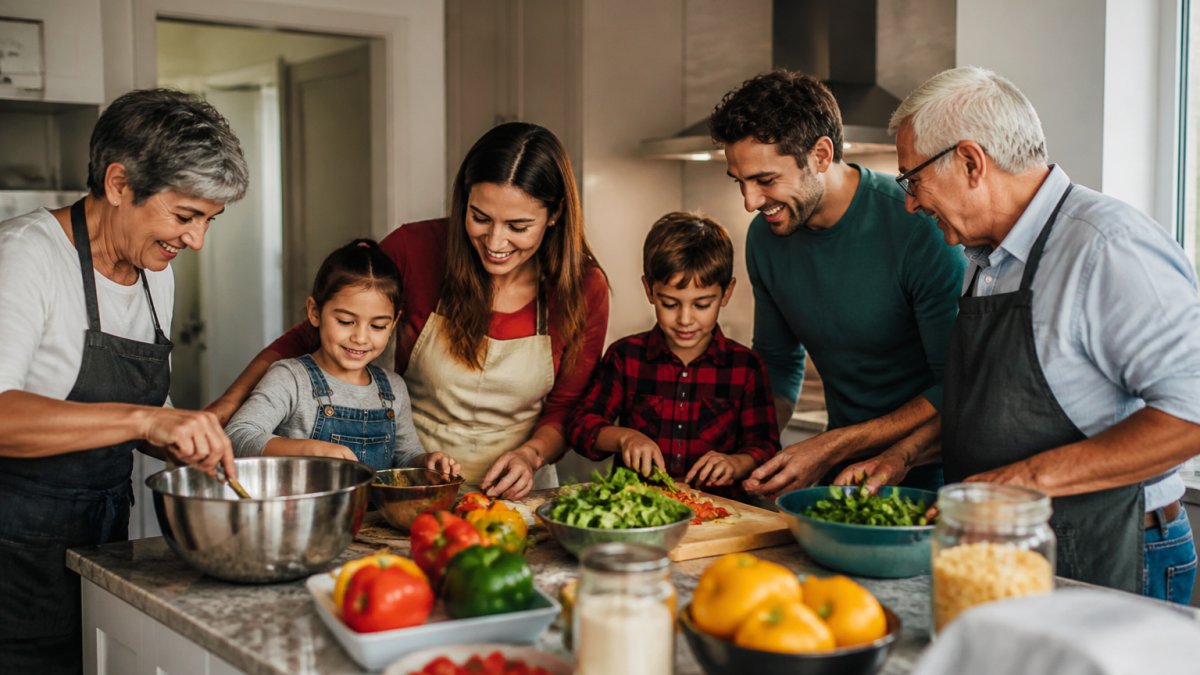
Start by clearing physical space. Remove clutter from counters. Put away phones and distractions. This signals that cooking time is special and focused.
Play music softly in the background. Music makes people relax. It fills silence without demanding attention. Choose songs everyone enjoys or can tolerate.
Set the temperature comfortably. A warm kitchen feels inviting. A cold one makes people want to rush.
Explain what's happening. Walk people through the plan before you start. "First we'll prep vegetables. Then we'll cook the sauce. Finally, we'll eat together." Knowing what comes next reduces anxiety.
Building teamwork and communication during cooking
Assign roles clearly. Someone manages the stove. Someone preps vegetables. Someone handles plating. Clear roles prevent confusion and overlap.
Encourage questions. "Why are we doing this?" is a great question. Answer honestly. "We're cooking on high heat because we want the vegetables to brown quickly." This teaches reasoning, not just steps.
Celebrate small wins. When someone completes a task well, acknowledge it. "That's perfectly chopped," or "You seasoned that perfectly." Praise specific actions, not just effort.
Create natural breaks for conversation. While something simmers, talk. Ask about people's days. Share stories. Cooking lessons for family bonding work best when conversation flows naturally.
Handle mistakes lightly. Someone oversalts the sauce. Someone burns the garlic. These happen. Fix it together and move on. "Let's add more of the other ingredients to balance the salt," teaches problem-solving.
Making the shared meal the celebration
The meal is the reward. Sit down together. Put phones away. Eat slowly.
Ask people what they enjoyed making. "What was your favorite part?" People often remember the process more than the food. A child might say, "I loved when I got to stir," not "the pasta was good."
Taste the food together. Notice flavors. "The garlic came through," or "The sauce is smooth." This teaches people to pay attention to what they eat.
Serve food family-style if possible. Pass dishes around. Let people serve themselves. This creates a sense of abundance and sharing.
Take a moment to acknowledge the effort. "We made this together. Everyone here made it possible." This reinforces that the meal is a shared creation.
Common Mistakes to Avoid
Trying recipes too complicated for the skill level creates frustration. Start simple. Advance slowly. A perfect scrambled egg is better than a botched coq au vin.
Rushing through cooking lessons for family bonding defeats the purpose. If you're watching the clock, people feel it. Set aside real time. Make it unhurried.
Giving too much direction removes learning. Instead of "stir it this way," ask "how would you stir this?" Let people figure things out. Mistakes teach better than instructions.
Ignoring preferences wastes energy. If someone dislikes mushrooms, don't force them into the recipe. Find alternatives. Cooking should feel inclusive, not punishing.
Forgetting to celebrate small wins discourages people. A child who successfully cracks an egg deserves acknowledgment. Recognition builds confidence for next time.
Not tasting as you cook means you miss teaching moments. "Does this need more salt?" invites people to develop their palate. Cooking is sensory learning.
Making Cooking Lessons Inclusive and Stress-Free
Accommodating dietary needs and preferences
Ask about dietary needs before you plan. Allergies, vegetarian preferences, foods people dislike, these shape your choices. A family with a nut allergy needs different recipes than one without.
Build flexibility into your menu. Instead of one fixed dish, offer components people can customize. Tacos work because everyone builds their own. Stir-fry works because people choose their vegetables.
Treat dietary needs as normal, not inconvenient. A vegetarian family member isn't a problem to solve. They're part of your family. Find recipes everyone enjoys.
Have backup options ready. If someone hates the main vegetable, have another available. This prevents anyone from feeling excluded.
Label ingredients clearly. If something has nuts or dairy, say so. People with allergies need to know what they're handling.
Adapting for different learning styles and abilities
Some people learn by watching. Let them observe before participating. Watching builds confidence for trying.
Some people learn by doing immediately. Give them a task right away. Hands-on practice works best for them.
Some people learn through explanation. Explain why each step matters.
Some people have physical limitations. A person with arthritis might struggle with knife work. Let them do prep that doesn't require gripping.
Neurodivergent family members might need clear instructions. Write steps down. Use exact measurements.
Someone with sensory sensitivities might need breaks from strong smells or sounds. Work near a window if garlic bothers someone.
Cooking lessons for family bonding succeed when everyone feels welcome. Small adaptations make huge differences.
Family cooking brings people together in ways few other activities do. The kitchen becomes a place where learning, connection, and joy happen simultaneously.
At Mise en Your Place, we understand that cooking lessons for family bonding work best when the pressure is off and the focus is on connection. If you're looking to deepen your family's culinary skills while enjoying a stress-free, guided experience, we offer private, hands-on cooking classes tailored to your kitchen and your family's needs.
Frequently Asked Questions
How can cooking together with family be a fun way to learn and bond?
Cooking lessons for family bonding create shared experiences where family members work toward a common goal. Each person contributes according to their abilities, building teamwork and communication. The process teaches culinary skills while the shared meal at the end creates a moment of celebration and togetherness. This combination of hands-on learning, laughter, and enjoying the results strengthens emotional connections and creates lasting memories.
What are easy recipes families can make together?
Start with recipes that have minimal prep steps and forgiving timings: homemade pizza with pre-made dough, stir-fries with pre-cut vegetables, pasta dishes with simple sauces, or tacos where everyone assembles their own. These recipes teach fundamental techniques like sautéing, seasoning, and plating while keeping stress low. Choose dishes where multiple people can work simultaneously so everyone stays engaged and the process feels collaborative rather than hierarchical.
How long should a family cooking lesson last?
The duration of a family cooking lesson can vary depending on the complexity of the meal and the family's preferences. Breaking the time into phases, such as welcome and planning, hands-on cooking, plating and presentation, and a shared meal, can help keep energy high and prevent fatigue.
How can families keep cooking lessons safe and stress-free?
Establish clear kitchen safety rules before starting: no running, proper knife handling, awareness of hot surfaces, and hand-washing protocols. Assign age-appropriate tasks so no one feels overwhelmed or unsafe. Prep ingredients in advance to reduce pressure. Keep the atmosphere encouraging rather than perfectionist, focus on learning and bonding, not flawless execution. Have a cleanup plan that doesn't fall entirely on one person, making the experience feel shared from start to finish.
Ready to cook something memorable?
Chef Chris brings the full restaurant experience into your home — every detail handled, every dish made together.