
how-to
Host an Interactive Cooking Party for Friends
Table of Contents
- What Makes an Interactive Cooking Party Different
- Plan Your Timeline and Preparation Checklist
- Easy Meals to Cook With Friends That Build Confidence
- Cooking Party Activities That Keep Everyone Engaged
- Organize a Dinner Party Cooking Competition
- Handle Dietary Restrictions, Allergies, and Food Safety
- Budget and Cost Breakdowns for DIY Cooking Parties
- Set Up Your Kitchen and Space for Success
- Frequently Asked Questions
Last Updated: October 14, 2026
What Makes an Interactive Cooking Party Different
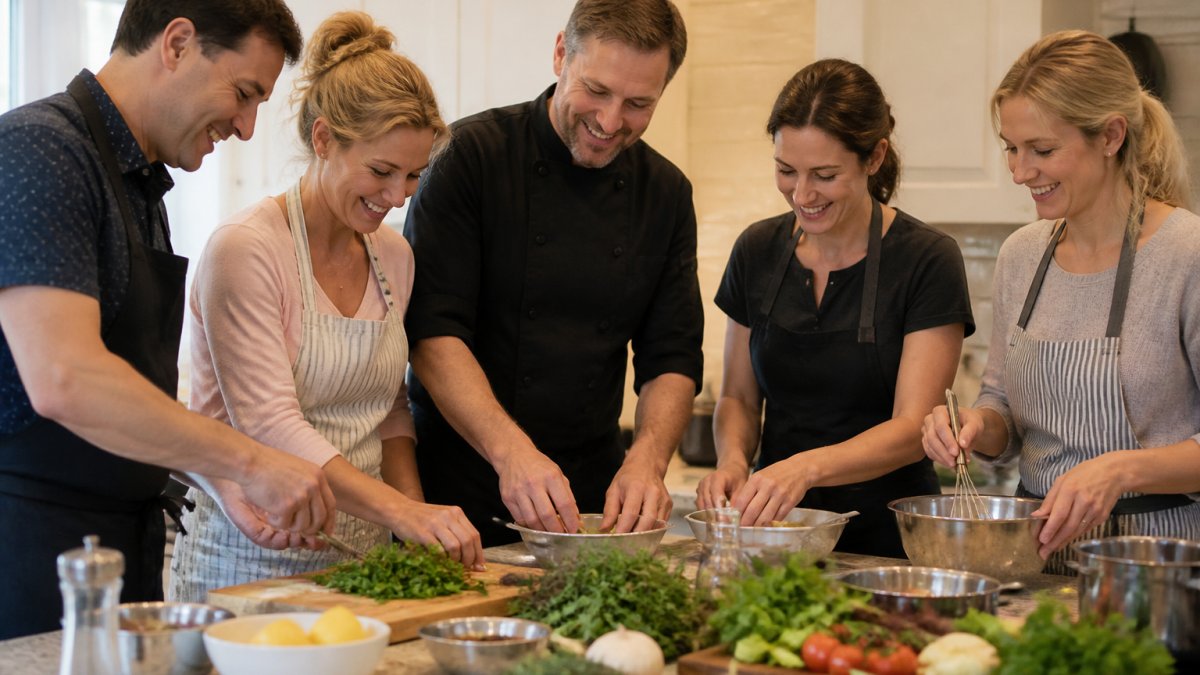
An interactive cooking party is a hands-on gathering where guests cook together instead of eating a prepared meal, learning techniques and sharing what they make as a group.
What sets it apart is participation: guests aren't passive diners but learning, creating, and working together in your kitchen.
Plan Your Timeline and Preparation Checklist
Success depends on planning, a rushed interactive cooking party becomes stressful. Use this timeline.
Two Weeks Before
Decide your guest list, menu, and date.
Key tasks:
- Choose a menu that matches your group's skill level
- Confirm guest count and dietary needs
- Select a date and send invitations
Ask about allergies and dietary restrictions early so you can adjust the menu without scrambling.
One Week Before
Finalize your menu and start prep work.
Key tasks:
- Confirm RSVPs and final guest count
- Create a shopping list organized by ingredient type
- Plan which tasks guests will handle (chopping, mixing, cooking)
Shop for ingredients, buying quality produce and proteins, fresh ingredients improve both the cooking and the food.
Day Of
Keep things calm and organized.
Key tasks:
- Do final kitchen cleanup and setup
- Set out all ingredients in order of use
- Arrange workstations with tools and cutting boards
Easy Meals to Cook With Friends That Build Confidence
Choose dishes that let everyone contribute without advanced skills.
Build-Your-Own Stations
Build-your-own meals work brilliantly: guests assemble dishes from components you've prepared or cooked together.
Best options:
- Taco bar: seasoned meat or beans, tortillas, toppings (cheese, salsa, lettuce, sour cream)
- Pasta bar: cooked pasta, two sauces, proteins, fresh herbs, cheese
- Pizza station: dough bases, sauce, cheese, toppings guests choose
These work because guests feel ownership over what goes in their dish.
Hands-On Technique Dishes
Teach real skills through hands-on dishes.
Strong choices:
- Hand-rolled pasta: guests learn to knead dough, roll, and cut noodles
- Dumpling or empanada making: filling, folding, and sealing by hand
- Bread baking: mixing, kneading, shaping, watching dough rise
These dishes teach technique because guests do the work, feeling the dough, tasting as they season, and seeing results change with their actions.
Cooking Party Activities That Keep Everyone Engaged
Cooking is the main activity, but the liveliest groups are the ones where nobody stands around waiting.
Assign Roles Before Guests Arrive
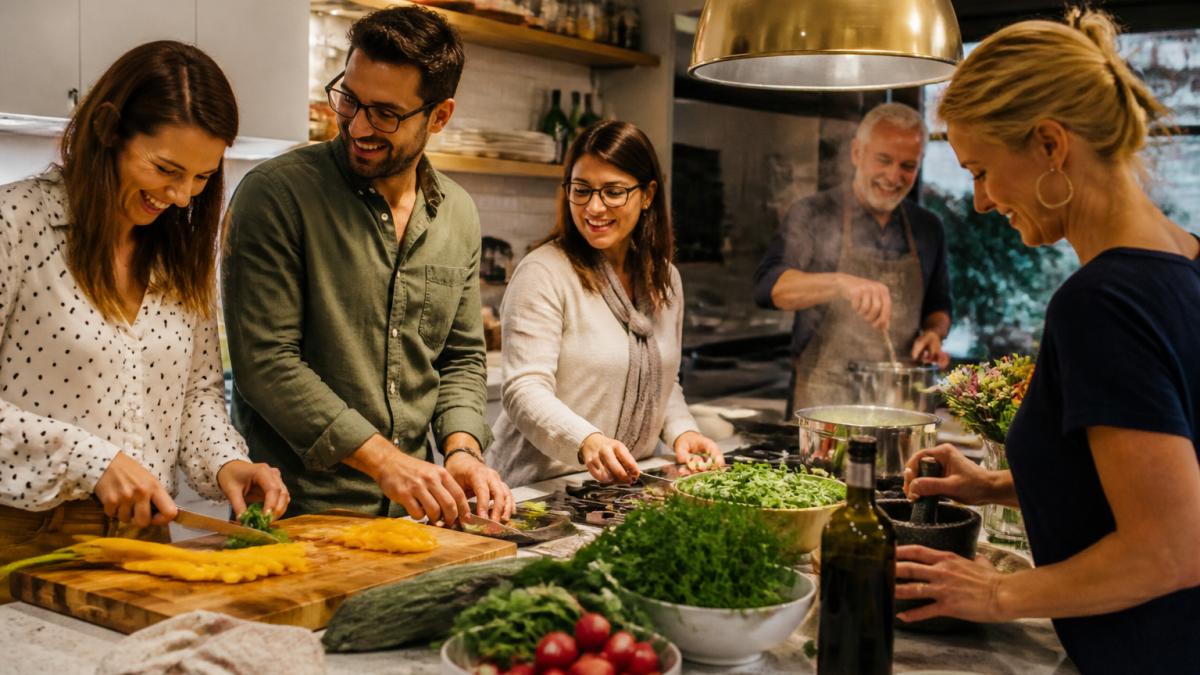
Write each role on a card at a station. Guests pick one on arrival, removing the awkward "what should I do?" moment and spreading people across the kitchen instead of clustering at the stove.
A workable role set for a group of six to eight:
- Prep lead, owns chopping, measuring, and getting ingredients to the right station
- Heat lead, manages the stove and oven, calls out timing
- Sauce and seasoning lead, tastes, adjusts, and keeps a written note of what changed
Rotate roles at the halfway point so nobody is stuck at the sink all night; nervous guests usually volunteer for harder roles once they've seen a dish come together.
Run a Five-Minute Demo, Then Hand Over the Knife
Open with one short demo of a technique the whole menu depends on, a safe claw grip, when oil shimmers, or when a sauce coats the back of a spoon.
Demos set an expectation of what "done" looks like; without that reference, beginners second-guess every step and stop participating.
Build In Low-Pressure Jobs for Beginners
Not every guest wants to be at the stove. Keep a tier of tasks that matter but can't ruin a dish:
- Washing and spinning herbs
- Tearing lettuce by hand
- Grating cheese
These jobs keep beginners inside the circle.
Use Taste Breaks as Checkpoints
Every 20 to 25 minutes, stop and taste. Have guests try a component before it's finished and name one change they'd make. This teaches palate development, gives the group a shared reference, and creates a natural pause. Keep salt, lemon, and sugar on the counter so guests can adjust and immediately re-taste.
Keep the Energy Up With Small Rituals
A few repeatable moments carry a long evening:
- The countdown, a 10-second warning before a dish comes off the heat
- The first-bite toast, everyone stops and tries the same dish at the same time
- The technique callout, when someone nails a fold, a sear, or a whisk, name it out loud
These cost nothing and give the night a rhythm groups remember longer than the recipe.
Match the Activity Mix to the Group
Close friends who cook often can handle a full hands-on menu with a competition twist; a group where several people have never held a chef's knife needs more demo time, more low-pressure jobs, and a simpler menu.
Most hosts over-plan activities and under-plan roles. One well-assigned task beats three loosely organized ones every time.
Organize a Dinner Party Cooking Competition
A friendly competition gives the evening a spine, a deadline, a reason to talk across the counter, and a natural ending. Design it so the least experienced cook still feels like a contributor.
Set the Format Before Guests Arrive
Decide three things in advance: teams, dishes, and time.
- Teams of two to four work best. Smaller teams mean everyone has a job; larger teams leave people watching.
- Same dish, different twist is the fairest format. Everyone gets the same base ingredients and the same time, and the variation comes from seasoning, technique, and plating.
- Different dishes, shared pantry is more chaotic but more fun for groups that already cook. Assign each team a category, starter, main, or dessert, and judge the whole table at the end.
A 25- to 35-minute cook window is the sweet spot, under 20 minutes the food suffers, over 45 the energy drops.
Score on More Than Taste
Taste alone rewards the strongest cook and discourages everyone else. Use a four-category scorecard so different skills can win:
- Flavor, does it taste good and is it seasoned properly?
- Technique, was the knife work clean, the sear even, the sauce the right texture?
- Teamwork, did the team communicate, share tasks, and clean as they went?
Score each out of five. The teamwork column keeps beginners in the game, a well-organized team of novices can beat a disorganized team of experienced cooks.
Give Every Team a Fair Starting Point
Fairness keeps a competition from turning sour. A few rules do most of the work:
- Identical ingredients. Same proteins, same produce, same pantry access. Variation comes from how teams use them.
- Identical equipment. If one team gets the cast iron and the other gets a nonstick pan, the results are not comparable.
- A shared prep window. Give everyone 10 minutes to wash, chop, and organize before the clock starts, removing the penalty for being slower with a knife.
Pick Prizes That Fit the Group
Prizes should be small, useful, and a little funny:
- A good bottle of wine or a craft non-alcoholic option
- A cookbook or a nice kitchen tool like a microplane or a digital thermometer
- A handwritten "best teamwork" certificate for the losing team
Avoid prizes that cost enough to make the competition feel serious. The point is laughter, not a trophy.
Run a Taste-Test Round Instead
If a full cook-off feels like too much, run a taste-test competition: prepare two versions of the same sauce, soup, or dressing with one small change (more acid, less salt, a different fat), have guests vote blind, then reveal the difference and discuss why one worked better.
This takes 15 minutes, teaches critical tasting, and gives the group a shared vocabulary for the rest of the meal.
Debrief at the Table
Before anyone eats, have each team say one thing they'd do differently next time. This turns the competition into a learning moment and sets up the next party.
Handle Dietary Restrictions, Allergies, and Food Safety
Never skip this. Dietary needs and allergies are serious. Plan for them from the start.
Ask guests early:
- Allergies (nuts, shellfish, gluten, dairy, etc.)
- Dietary preferences (vegetarian, vegan, keto, etc.)
- Religious or cultural restrictions
- Medications that affect food choices
Build your menu around these restrictions rather than treating them as obstacles. If half your guests are vegetarian, make the main dish vegetarian so everyone eats well together.
Food safety basics:
- Keep raw meat separate from other ingredients
- Use different cutting boards for meat and vegetables
- Wash hands after handling raw meat
- Cook meat to proper temperatures (use a thermometer)
Label ingredients clearly for severe allergies and keep allergen-free utensils separate, minutes of effort that prevent serious problems.
Budget and Cost Breakdowns for DIY Cooking Parties
DIY interactive cooking parties cost less than you might expect.
Ingredient costs depend on:
- Number of guests
- Menu complexity
- Quality of ingredients
- Dietary restrictions (specialty items cost more)
Ingredient costs depend on the number of guests, menu complexity, quality of ingredients, and dietary restrictions (specialty items cost more).
Where to save money:
- Buy seasonal produce (cheaper and fresher)
- Use proteins on sale
- Make components from scratch instead of buying prepared items
- Buy bulk spices and pantry staples
Where it's worth spending:
- Quality olive oil
- Fresh herbs
- Good cheese
- Fresh seafood or quality meat
The experience matters more than fancy ingredients. Simple, fresh food cooked together beats expensive components prepared alone.
Set Up Your Kitchen and Space for Success
Your kitchen layout determines whether the evening flows or feels chaotic.
Label each station. Guests know where to go and what to do.
A well-organized space makes the experience better for everyone. Guests feel comfortable.
Hosting an interactive cooking party transforms an ordinary evening into something memorable.
At Mise en Your Place, we believe the best cooking happens when people feel supported and confident.
Frequently Asked Questions
How do you host an interactive cooking party for friends?
Start by choosing a simple menu that allows hands-on participation, such as build-your-own tacos or pasta dishes. Invite 4-8 friends to keep the group manageable. Set up your kitchen with all ingredients prepped and organized (mise en place), assign cooking tasks that match skill levels, and plan for about 2-3 hours total. Include a live cooking demonstration to teach techniques, then guide guests through preparing their own portions. Finish with a shared meal where everyone enjoys what they've made together.
What are some easy meals to cook with friends that work well for beginners?
Build-your-own stations are ideal for mixed skill levels: tacos with toppings, fondue with dippers, or pasta bar with sauce options. Simple hands-on dishes include homemade dumplings, quesadillas, stir-fries, or flatbread pizzas. These require basic knife skills and allow guests to work at their own pace. Avoid dishes with strict timing or complex techniques. Pair any main dish with a shared appetizer or salad that guests can prepare together to build confidence before moving to the main course.
What cooking party activities keep guests engaged if their skill levels vary widely?
Combine live cooking demonstrations with hands-on participation. Start with a short demo where you or a professional instructor show a technique, then let guests try it themselves with guidance. Rotate tasks so no one feels left out: some guests prep ingredients, others cook, and others plate or garnish. Include sensory activities like taste tests to build palates. Assign roles based on comfort level, confident cooks handle stovetop work while beginners prep ingredients or assemble components. Encourage teamwork and conversation throughout.
How do you handle dietary restrictions and allergies at an interactive cooking party?
Ask guests about dietary restrictions and allergies at least two weeks before the party. Plan a flexible menu with substitution options built in, for example, offer both meat and vegetarian proteins, gluten-free and regular pasta, or dairy-free and regular sauce. Label all ingredients clearly during prep so guests with allergies know what they're handling. Keep allergen-free ingredients separate from others. Brief all guests on cross-contamination risks if severe allergies are present, and assign prep areas accordingly. Have backup simple dishes available if someone's restriction wasn't disclosed beforehand.
Ready to cook something memorable?
Chef Chris brings the full restaurant experience into your home — every detail handled, every dish made together.