

how-to
7 Private Chef Meal Prep Services Facts You Need
Last Updated: November 8, 2026
Quick Summary
Private chef meal prep services are arrangements where a professional chef shops, cooks, and portions meals in your own kitchen, leaving you with a stocked fridge and nothing to clean. The chef works inside your home, with your equipment, and builds meals around your household's real preferences rather than a rotating menu list.
- Weekly meal prep is a recurring chef visit, usually once or twice a week, to restock your fridge.
- Start with one session before booking recurring service to confirm you like the chef's cooking.
- Skipping the consultation step is the single biggest cause of wasted food.
- A comparable quote should itemize chef labor, groceries, containers, travel, minimums, and taxes.
- Portion meals into shallow containers so they cool faster and keep longer.
Table of Contents
- What Private Chef Meal Prep Services Actually Include
- How In-Home Meal Prep Works, Step by Step
- A Transparent Look at Private Chef Cost
- Private Chef vs. Meal Delivery: Which Fits Your Week?
- Food Safety, Storage, and Reheating at Home
- Questions to Ask a Private Chef Before Booking
- How to Measure the Value and Time You Save
- Book a Hands-On Cooking Session With Chef Chris
- Frequently Asked Questions
What Private Chef Meal Prep Services Actually Include
Private chef meal prep services are arrangements where a professional chef shops, cooks, and portions meals in your own kitchen, leaving you with a stocked fridge and nothing to clean. Many people picture either a catered dinner or a delivery box, and miss the middle ground entirely. The core difference is that a chef works inside your home, with your equipment, and builds meals around your household's real preferences rather than a rotating menu list.
Weekly Meal Prep vs. One-Time Service
Weekly meal prep is a recurring visit: a chef returns on a set schedule, usually once or twice a week, to restock your fridge with ready-to-eat meals. One-time service covers a single event, such as a dinner party or a recovery week after a busy stretch. Recurring service suits busy families and professionals who want the fridge handled permanently. One-time bookings work better for testing the waters or covering a short gap.
How In-Home Meal Prep Works, Step by Step
Most in-home chef engagements follow the same five stages, whether you book a single session or a standing weekly slot.
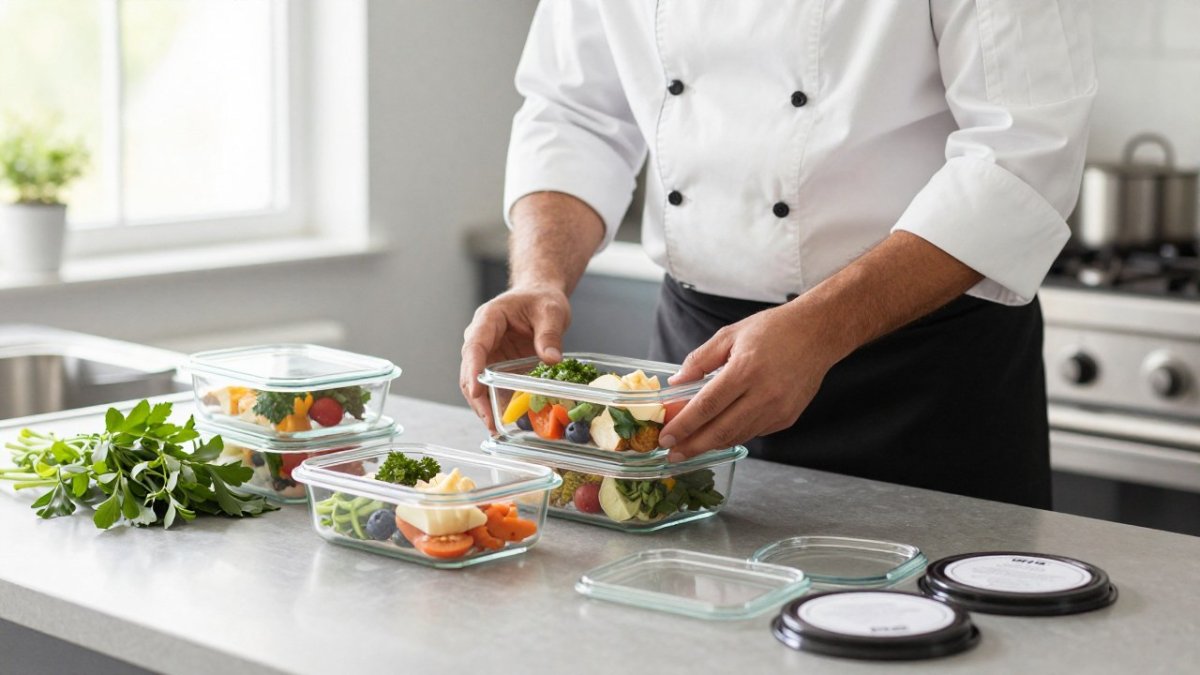
- Chef consultation. You discuss household size, dietary preferences, allergies, and how many meals per week you need.
- Menu customization. The chef drafts a custom menu, often seasonal, and adjusts it before the visit.
- Grocery shopping and ingredient sourcing. The chef buys the ingredients, either billed separately or folded into a flat fee.
- Batch cooking and portioning. Meals are cooked in your kitchen, then portioned into containers for the week.
- Storage and kitchen cleanup. Everything is labeled, stored, and the kitchen is left clean.
If your kitchen is compact, don't assume that rules you out. Our guide on whether a private chef can cook in small kitchens covers how chefs adapt to tight spaces.
Watch out: skipping the consultation step is the single biggest cause of wasted food. A chef who doesn't know your household's real eating habits will cook portions that go uneaten.
A Transparent Look at Private Chef Cost
Private chef cost varies by service model, and no two quotes look identical. What separates a fair quote from an expensive surprise is understanding the pricing model behind it. In-home meal prep arrangements commonly use one of three structures, and each one shifts risk and predictability in a different direction.
The Three Pricing Models You Will Encounter
- Flat per-session fee plus groceries. You pay a set labor rate for each visit, and the chef bills ingredient costs separately, usually with receipts. This model is the easiest to audit because food costs are visible, but the grocery line can swing week to week with seasonal prices and specialty requests.
- Per-meal or per-portion rate. The chef quotes a single figure per meal or per portion that bundles labor, sourcing, and packaging. This is the most predictable for budgeting, but the bundled rate hides how much of the total is food versus labor, so ask what portion size and protein level the rate assumes.
- Hourly rate plus groceries. Common for one-time or trial sessions, where the scope is uncertain. Hourly billing rewards a fast, organized chef and penalizes a slow one, so ask for an estimated hour range before the visit and confirm what happens if the session runs long.
Recurring weekly service is often quoted per session or per meal, while one-time bookings sometimes lean toward hourly. Neither is inherently cheaper; the model simply decides who absorbs the uncertainty.
What a Quote Should Itemize
A quote you can compare line by line should separate these components rather than folding them into one number:
- Chef labor for planning, shopping, cooking, portioning, and cleanup.
- Groceries, either estimated or billed at cost with receipts.
- Containers and labeling, which some chefs include and others charge for.
What Drives the Price Up or Down
- Volume: More meals and more diners raise both labor and grocery costs, but the labor cost per meal usually falls as volume rises because planning and travel are spread across more food.
- Ingredient sourcing: Specialty, organic, or seasonal ingredients cost more than standard grocery lists, and out-of-season produce can move a grocery line significantly.
- Dietary complexity: Allergy-safe and macro-specific cooking takes more planning, separate prep areas, and sometimes duplicate ingredients, all of which add labor.
- Frequency: Weekly service often costs less per visit than occasional bookings because the chef amortizes menu planning and sourcing across a standing schedule.
Watch out: comparing quotes on the headline number alone hides whether groceries, containers, and taxes are included, which can make the cheaper-looking quote the more expensive one once the full bill arrives.
For a closer look at how the numbers stack up against the value delivered, our breakdown of whether private chef service is worth it walks through the cost-and-value math.
Private Chef vs. Meal Delivery: Which Fits Your Week?
The private chef versus meal delivery decision comes down to control and effort. Meal delivery sends pre-portioned kits or ready-to-eat meals to your door; you still cook or reheat, and menus rotate on the company's schedule. If your goal is learning technique rather than outsourcing dinner, a hands-on class format is the better fit; our private cooking class experiences show what that looks like in practice.
| Factor | Private Chef | Meal Delivery |
|---|---|---|
| Who cooks | Chef, in your kitchen | You, or reheat only |
| Menu control | Fully customized | Fixed rotating menu |
| Dietary flexibility | High | Moderate |
| Effort per week | None | Cooking or reheating |
| Cleanup | Handled by chef | Yours |
Food Safety, Storage, and Reheating at Home
Food safety is where in-home meal prep earns or loses its value. Cooked meals should be cooled promptly and refrigerated rather than left on the counter (Food safety tips for leftovers). Health Canada publishes food safety guidance for preparing and storing food that's worth reading before your first session.
Watch out: storing a week's worth of meals in deep pots instead of portioned containers slows cooling and shortens shelf life.
Questions to Ask a Private Chef Before Booking
Before you book, ask about experience, insurance, sourcing, storage, and cancellation terms. A chef with real culinary training should be able to explain technique, not just recite a menu. Ask how they handle allergies, who buys the groceries, how meals are labeled, and what happens if your schedule changes. Get the cancellation policy in writing. If you're ready to move forward, our guide on how to book a private chef for a small group at home covers the practical steps. A short list of questions worth asking:
- What is your culinary training and background?
- How do you handle allergies and cross-contact?
- Are groceries billed separately or included?
- How many days will each meal keep?
How to Measure the Value and Time You Save
Time savings is the clearest way to judge whether private chef meal prep pays off, but only if you measure it against a real baseline instead of a vague sense of being busy. The framework below turns the decision into arithmetic you can do in a few minutes.
Step 1: Build Your Weekly Baseline
Track one normal week before you book anything. Log the hours you spend on four activities: meal planning, grocery shopping (including travel and unpacking), cooking, and cleanup. Most households underestimate cleanup and shopping travel, so count them honestly. Add the number of takeout or delivery orders you place in that week and what they cost.
Step 2: Put a Number on Your Hours
Decide what an hour of your time is worth to you. There is no universal figure; the point is to choose one deliberately rather than defaulting to zero. Multiply your weekly meal-related hours by that figure. This is the labor value you are currently spending, whether or not you ever see it on a bill.
Step 3: Add the Hidden Costs
Three costs rarely show up in the comparison but belong in it:
- Food waste. Estimate how much food you buy and throw away in a typical week. A chef cooking to a plan and portioning deliberately tends to reduce this, because quantities are set by the menu rather than by package sizes.
- Takeout premium. Delivery and restaurant meals usually cost more per serving than home-cooked food, so the orders you replace are part of the savings side of the ledger.
- Decision fatigue. Harder to price, but real: the mental load of deciding what to eat every night is a cost the service removes.
Step 4: Compare Against the All-In Service Cost
Take the full quote from the cost section, including groceries, containers, travel, and taxes, and divide it by the number of meals you receive. That gives you a true cost per meal. Compare it with what you currently spend per meal once you add groceries, takeout, and waste together. The gap between those two figures, set against the labor value from Step 2, is the honest answer to whether the service pays off for your household.
Who the Math Usually Favors
The framework tends to favor households with high weekly meal-related hours, frequent takeout, and a high value on their time.
Watch out: running the comparison on the chef's labor fee alone, without groceries and taxes, understates the true cost per meal and makes the service look cheaper than it is.
The Canada Food Guide is a useful reference for judging whether the meals you're receiving actually match your nutrition goals, rather than just tasting good.
Book a Hands-On Cooking Session With Chef Chris
The best way to judge any chef's skill is to cook alongside them once. Ready to plan your evening? Tell us about your group and preferred date and we'll take it from there.
Private chef meal prep only works when the chef fits your household, your kitchen, and your schedule. Mise en Your Place builds each session around your menu preferences, handles all prep and cleanup, and teaches real technique along the way.
Frequently Asked Questions
What does a private chef meal prep service include?
A private chef meal prep service typically covers menu planning, grocery shopping and ingredient sourcing, in-home cooking, portioning, and storage. Many chefs also handle kitchen cleanup so you are left with a stocked fridge and a clean counter. Some services, like Mise en Your Place, focus on hands-on cooking classes where you learn techniques while the chef handles mise en place. Confirm exactly what is included, since services vary widely in scope and weekly frequency.
How much does a private chef cost for weekly meal prep?
Private chef cost depends on the number of meals, dietary needs, ingredient sourcing, and how often the chef visits. Most services quote a chef fee separately from groceries, so your total reflects both labor and food. Pricing depends on the number of meals, dietary needs, delivery schedule, and ingredient sourcing, so please visit the Mise en Your Place website for current prices or to request a quote. Ask for a written quote that separates chef time from ingredient costs before you commit.
Is a private chef better than meal delivery for a busy household?
The private chef vs. meal delivery choice comes down to control and involvement. Meal delivery sends ready-to-heat or portioned meals with no chef in your kitchen. A private chef cooks in your home, adapts menus to allergies and preferences, and can teach you techniques as they work. If you want fresh meals tailored to your family and are curious about cooking, a private chef offers more flexibility and learning.
What should I ask a private chef before booking meal prep?
Key questions to ask a private chef include: what is included in the service, how dietary restrictions and allergies are handled, how groceries are sourced and billed, cancellation and rescheduling policies, and how long each session takes. Also ask whether the chef cleans up and how meals should be stored and reheated. A short consultation call clarifies expectations and helps you choose a service that fits your schedule and kitchen.

Ready to cook something memorable?
Chef Chris brings the full restaurant experience into your home — every detail handled, every dish made together.